I did not, as many gay men do, find refuge in the theater. In high school, I was on the periphery of the theater crowd, neither cast or crew, but rather more like an audience member invited on-stage. I played piano for musicals and comedic melodramas. I donned a black cloak and lace-up white shirt to scare children for a ‘haunted house’ fundraiser. I dutifully memorized my lines and kohled my eyes to play the Valet in a senior production of Sartre’s No Exit. I remember the strange feeling of being totally aware of my body, angled it to point away from the stage, though I was only introducing the main players into their black box of hell. I resisted the urge to look at the audience even though I knew they were looking at me. My body felt hot from the stage lights; the pores on my face opened to sweat and clogged on powder. I heard myself recite my lines, not as my character, but as myself mimicking my character.
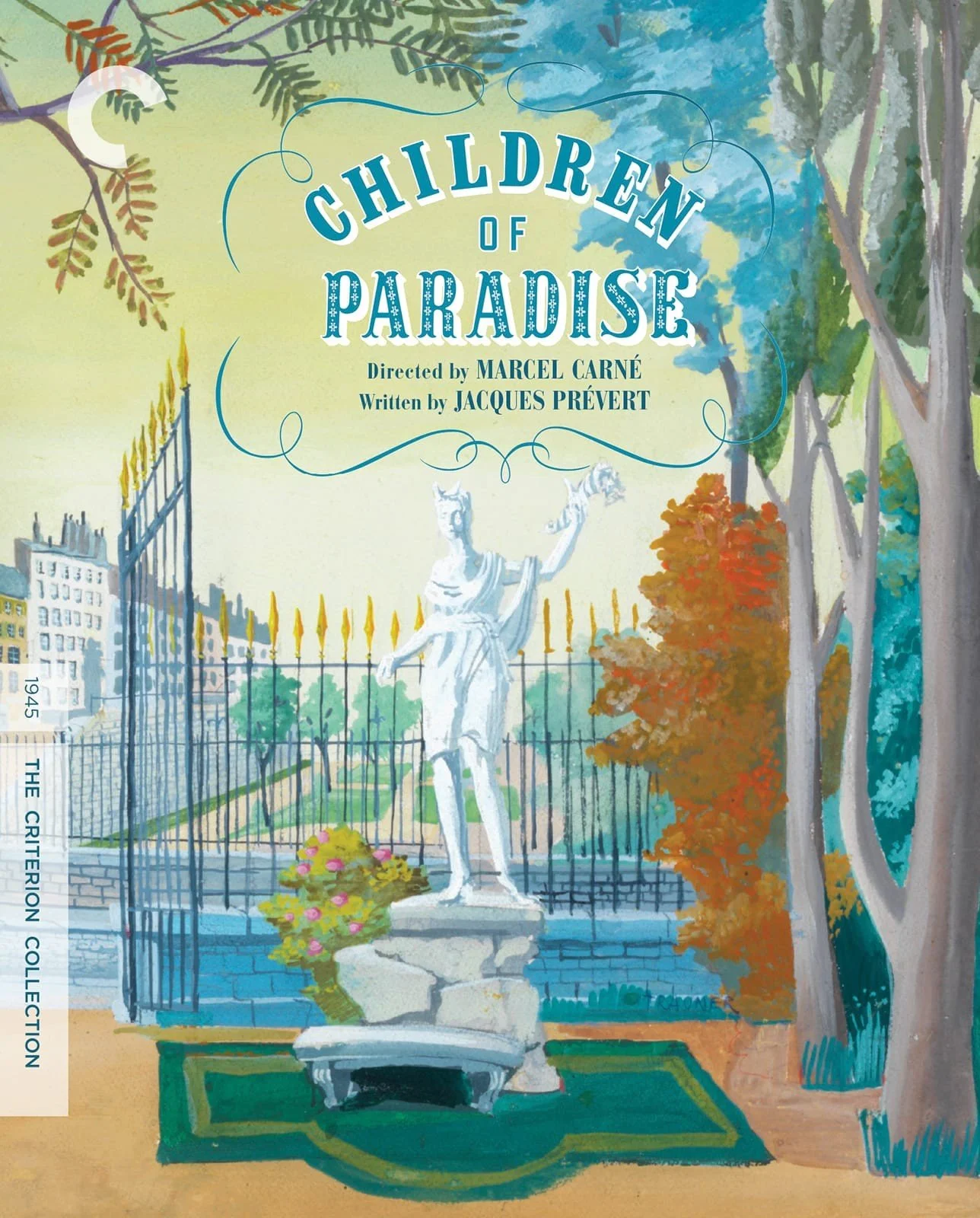
Perhaps in this way, I was no difference from Garance at the start of Children of Paradise. The sideshow barker promises a vision of Truth, of naked, unadorned beauty. And yet when patrons step in the tent, they see, on a rotating platform, Garance, nude, yes, but submerged in a barrel of a water from the chestbone down, holding a mirror, as if admiring herself. We, the actors, observe ourselves as much as the audience observes us.
And I, a bit part in a classic French one-act, was instructed to speak as if I wanted the person in the farthest row to hear me explain the vagaries of hell: the finer points of a Second Empire drawing room, the lack of torture chambers and flames, why a bell won’t automatically summon me. I spoke in a dead serious manner, not monotone, but flat, as though I know that being a Valet was a dead-end job. But I suppose I could have played the character in any number of ways, drawing upon different versions of me: I could have been more creepy, for the Goth me; I could have been more sardonic, for the Gen X me; I could have hammed it up, for the campy me.
So many hidden identities. How, then, in Children of Paradise did I not recognize, as Edward Turk suggests, that Lacenaire was coded as gay? Or that the mime Baptiste was somewhat effeminate himself? Or that ladies’ man Lemaître also felt sexually fluid? Or that the director himself was open gay? Maybe the thick, swooning melodrama distracted me from the Truth. Maybe I was dazzled by the layers of theatricality. Maybe the French already seem preternaturally fruity.
My part in the play is over quickly. I take my leave of the characters and wait in the darkness of the wings until it’s time for the curtain call. The lights come up and I bow. But even then I’m still not myself.