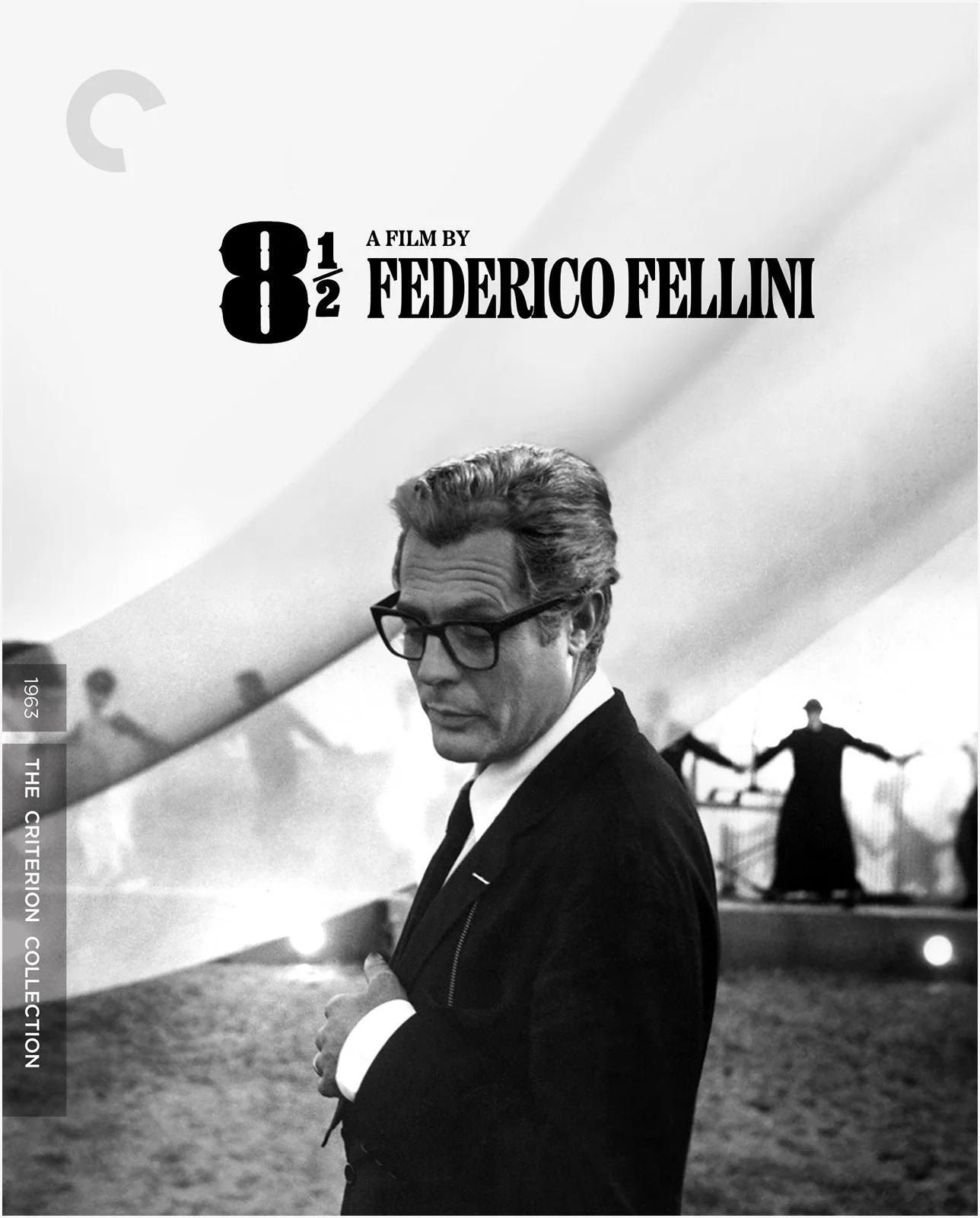
The first time I tried watching 8½, I fell asleep a quarter of the way in. I attributed this to exhaustion. After a day of teaching and general life, fatigue creeps up behind you like a mugger and rifles through your pockets for attention. A low level of anxiety hung on my back like a cloak; my novel was about to go on submission. Almost ten years’ worth of work entering the world. Despite Marcello Mastroianni’s rakish (and cosmetically aged) face and the clever meta sequences, I couldn’t keep my eyes open. I only made it to Saraghina’s rhumba.
The second time I tried watching it, I began to fear that maybe it wasn’t me. True, it was another post-teaching day, and I had been on edge waiting to hear back from editors about my book. I have loved Fellini’s other films: La Strada, Amarcord, Nights of Cabiria. What, then, was it about 8½? So many critics have called it Fellini’s masterpiece, a landmark piece of world cinema. Why couldn’t I make it through it?
Perhaps, in its exploration of an artist hitting a creative wall, I saw myself: in interior chorus of critics and business people nattering in my ear like gnats. Perhaps the film’s digressions into memories, fantasies, nostalgia, and dreams invited me into my own whenever I closed my eyes to “take a break.” Perhaps, I told myself, I needed a stronger narrative to hold my attention. The film is, after all, very much like its working title: A Beautiful Confusion. I didn’t make it past the introduction of the unfinished stage set, a skeletal outline of what was to be a rocket ship, launched after a nuclear holocaust. I feared I might have to watch the film piecemeal, another six and a half pieces probably.
But then, on the third watch, it clicked. I had no class that day. The afternoon had been warm and inviting. I had taken a nap. My book had sold. The narrative had reached the crucial point when Marcello Mastroianni and Anouk Aimée, two impossibly beautiful people from whom you cannot withdraw your eyes, bicker from their individual beds.
And despite the interpersonal drama, the film shifts into glorious satire: the harem sequence, every hot-blooded male’s fantasy turned nightmare; the press conference, an assault of overstimulation and withdrawal; and the final sequence, a return to Fellini’s carnivalesque leanings, a full-on phantasmagoria, where all the members of the cast gather, join hands, and dance to a clown marching band. The director has given up on his project. He has reconciled with his wife. The set has been abandoned and remains as a scaffold, unfinished, partially demolished, now a stage around which the cast dances. It is the center of a celebration: it is what was, it is what could have been. But most of all: it is what we have in front of us.