The second anniversary of my father’s death. The day before, my mother texts a message to her children reminding us. I run it through a translation app to understand it. On the day, I set his picture on a makeshift altar, a red-lacquered cabinet that resemble a Chinese antique. Inside is where we store our gin. The picture was a portrait from his teaching days, dress shirt, tie, smile. I put a bronze Buddha head in front of it. I’ve had that head for years; I bought it from a Pier 1, most likely. It has survived its progenitor. It’s filled with rice coated with a fragrant brown ash. I fished out the black stems of old incense and threw them away. They looked like burnt straw. I tucked three sticks of new incense into the rice. I didn’t bow three times the way I’m supposed to. I waited for a second to see if he’d come speak to me.
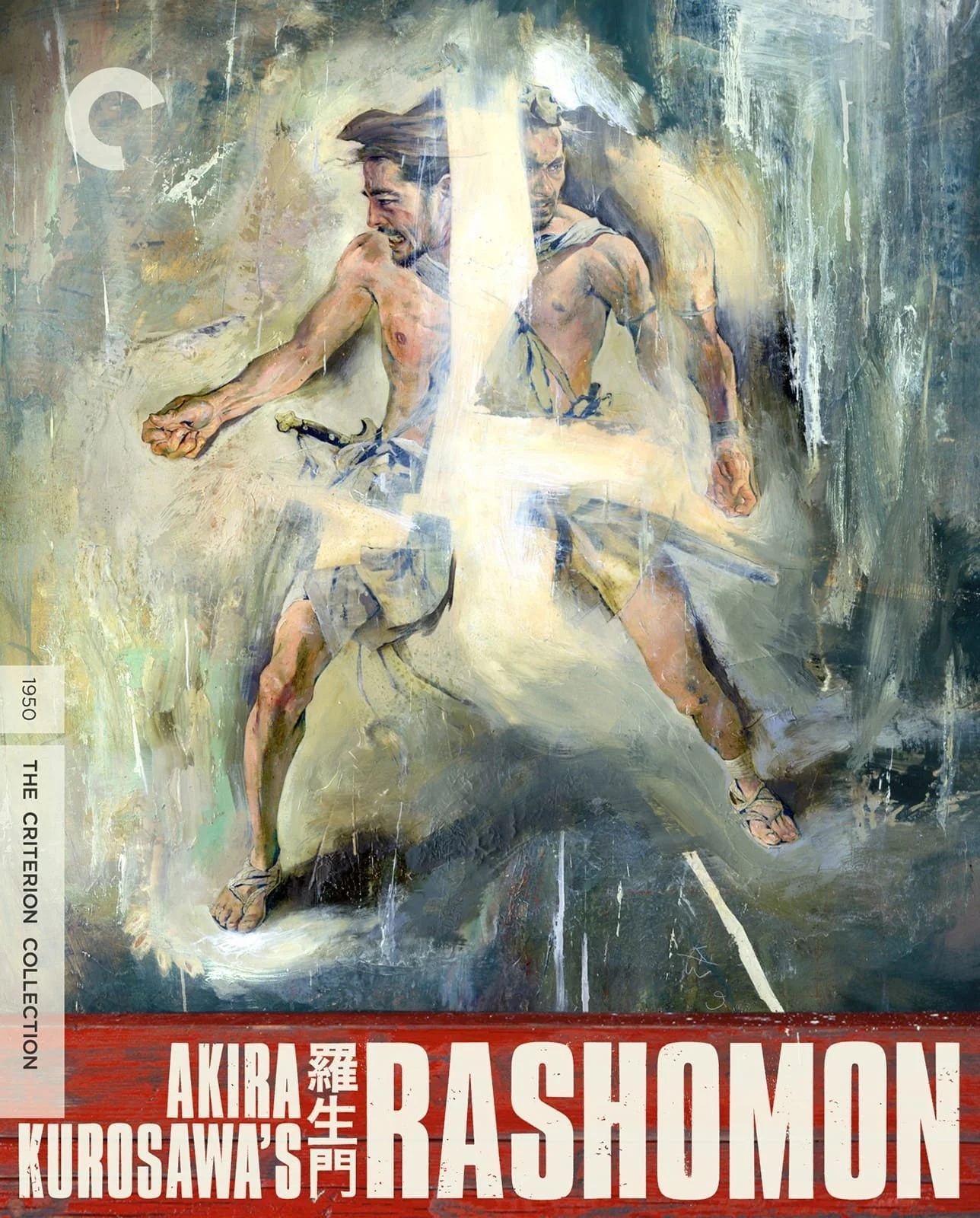
The shaman in Rashomon uses a shakujō, a staff topped with six metal rings, to commune with the dead. The rings represent the Six Realms of Existence. She rattles the staff as she circles an altar table. The rhythmic noise puts her into a trance. On the table is a bowl, smoke rising from inside it. Incense, most likely. She uses the staff as an antenna, channeling the dead directly into her body to speak its truth.
On my altar, I forgot a few key items. I didn’t leave out any food as an offering. When I was young, I was taught that on days of remembrance, the spirits don’t actually eat the food that we set out. Since spirits are the ‘essence’ of a person, they only eat ‘the essence’ of the offering. Did that mean, I wondered at the time, that what was left would be flavorless? My sister’s multi-tiered altar featured a plate of crispy pork belly, a bowl of vermicelli, and a cup of tea. My mother thought that my sister was going to put out mực xào mắm ruốc—squid sautéed in shrimp paste—one of my father’s favorite dishes, but that’s a lot of essence to eat. My mother and older brother had a small pyramid of oranges. I received these pictures through a group text, the dead bouncing from antenna to antenna.
I told my mother that I hadn’t set out any food. My mother told me that all I really needed was hương (incense) and hồng (flowers). His spirit was already someplace else. I don’t remember hearing that before. The shaman, along with the bowl of incense, has a small bonsai tree, festooned with scraps of sutras attached to its boughs. Perhaps they’re tanzaku, wishes and prayers fluttering in the breeze.
I didn’t have flowers either.