
Alfred Hitchcock

137: Notorious by Viet Dinh

One of Hitchcock’s most celebrated shots: it starts overlooking a party, as though standing upon a balcony, capturing the guests in their finery, though your eye is drawn immediately to Ingrid Bergman off to the right of the frame. And, soon enough, the camera descends from its height, keeping Berman to the right while pulling in tighter on her—not on her face, though, luminous as it is, but going instead towards her hand, which clutches, shakily, a key.

We know this Unica key is significant because Hitchcock has framed it as such: whether with an insert shot of a keyring or by highlighting it against Claude Rains’ black dinner jacket, as Bergman, in an embrace, hides it from his view. Again and again, Hitchcock puts items in the foreground: a mismatched wine bottle label. A coffee cup. And suddenly, these little things take on enormous importance—the bottle filled with uranium; the cup filled with arsenic.

When I last visited my family home in Colorado, I slept in my old room, which, for the past few years, had become my father’s room, since he could no longer able to ascend and descend the stairs to the basement to reach his room. And all over the room we shared, I found the history of myself in the paraphernalia still there: a dusty vase of dried peonies; the complete collection of Elfquest graphic novels; a tin filled with ‘collectible’ pencils from elementary school.

As for my father’s items, there was almost no trace: my brother and I had cleared out his presence shortly after his death. We thought that these would be a difficult reminder for my mother, who still used his computer to watch her chair exercise videos. We had missed things, of course—a well-worn track suit hanging up in the closet; a box of insulin needle tips in a cabinet—but these were hidden from view. I’d get to them eventually.

One night, as I was getting ready for bed, I put my glasses on the bedside dresser. I heard the clack of plastic on plastic. I had put my glasses on my father’s, which had sat at the base of the desk lamp, undisturbed for almost two years. Wire-rimmed, bifocal lenses. I should have donated them—Costco has a box in its optical department for this—but I overlooked them. Not yet, I told myself.

I tried to remember him wearing this pair but couldn’t. In those final years, he probably only used them for reading at the computer. He never wore them around the house or on those rare occasions when we would venture out for a bowl of phở. But I maybe I had simply forgotten them, the way glasses simply meld onto one’s face—our entire family has long been cursed with bad eyesight—an irreducible feature, like a nose or mouth. And it was only now, framed in the foreground, that they finally took on greater significance.
136: Spellbound by Viet Dinh

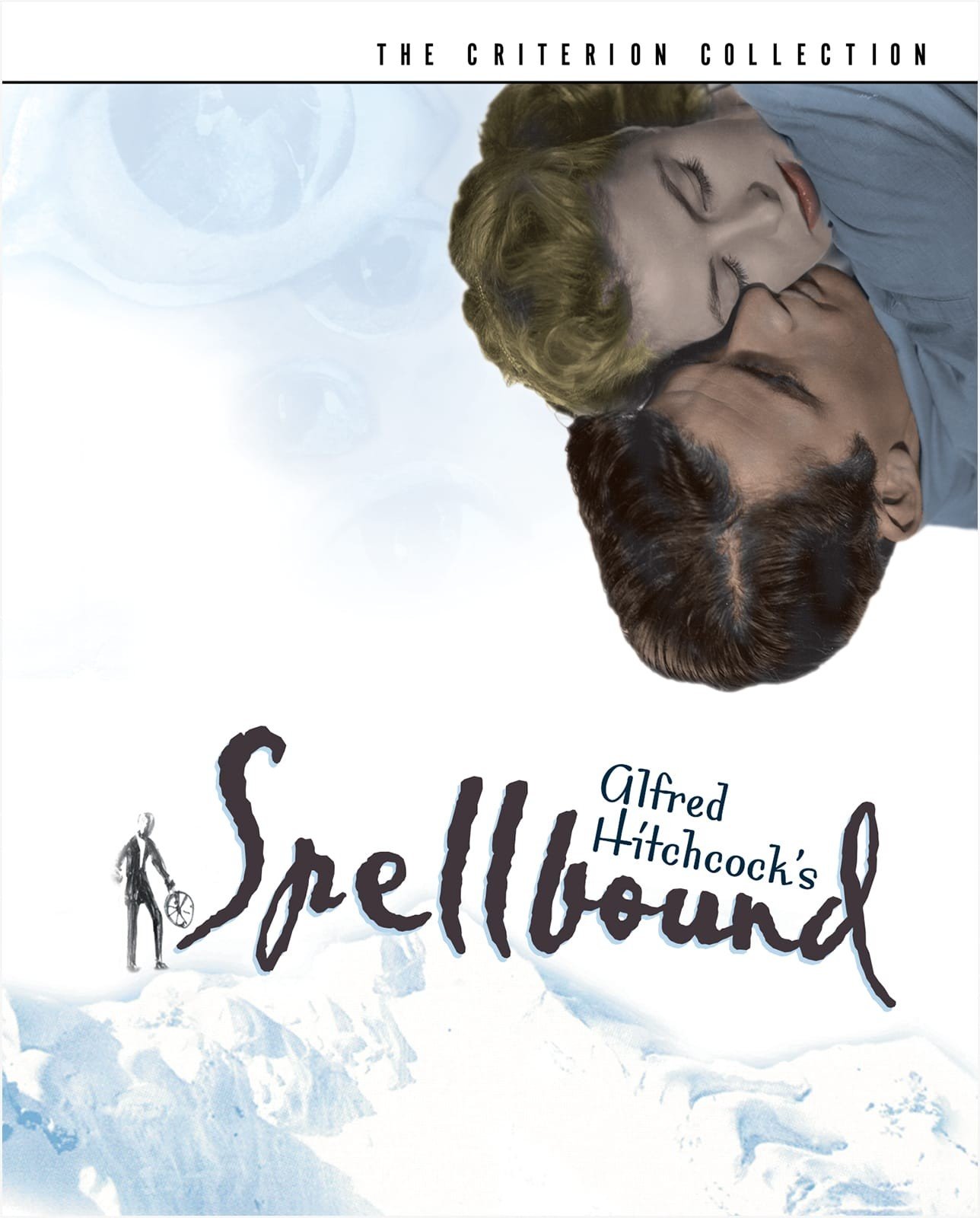
Spellbound opens with a four minute-long sequence of the musical score over a black title card that reads Overture. There are no sound cues, no images, no lead-ups to the film proper. It’s how Selznick presented his big film premieres: devoid of the incessant advertisements and previews of modern movies. But the Overture evokes something else more suited to the subject matter: the black card is like a blank screen onto which we can project our own thoughts, images, visualizations. It is, as Miklos Rozlas’ score plays, an invitation to dream.

In the past few weeks, I’ve dreamt about my father. In the most vivid one, I was watching a PBS-style documentary about his life, and even while the dream was occurring, I remember thinking to myself: That can’t be true, he never told me that. But it unspooled nonetheless: this screen within a dream, telling me all these things that I should have already known.

I used to keep a record of my dreams—it might have started in college, when I was eager to process msyelf with a freshman-level understanding of Freudian psychoanalysis. Maybe this is the process of self-discovery: by delving into our dreams, we understand our shifting selves. I remember browsing encyclopedic tomes of dream symbols and meanings: teeth falling out mean the fear of losing something valuable; arranging flowers mean a search for peace. But, in truth, there’s nothing more boring than listening to someone else talk about this weird dream he had last night.

The centerpiece of Spellbound is, of course, the dream sequence rich with Dali’s surrealism: table legs that are human; mountainous outcroppings that look like faces; wheels that appear to have melted. Interpreting the dream solves not only one mystery, but two—the subconscious as a skeleton key.

But it’s the other dream-like moment that stays with me: as Ingrid Bergman and Gregory Peck embrace for the first time, she imagines a door opening to reveal another, which itself opens to reveal another: a corridor of doors, now flung open, perhaps a too on-the-nose symbol of sexual awakening.

In the last months of his life, I tried to get to get my father to talk about his past: his experiences during the war, living in Vietnam before the war, his childhood. I wanted to understand him better, to learn about the forces that shaped him. But each time I did, he grew silent. I wonder if I should have pushed him more, but each time I asked, he turned back to the television screen in front of us. He watched almost nothing except YouTube videos of rural Vietnamese families gathering food and preparing meals, or Vietnamese pop songs from his favorite singers. Sometimes he had tears in his eyes. I put my arm around his shoulders, tried to comfort the fears and pains seeping out of him, but, in my mind, I saw a corridor of doors, each door closing shut, and locking tight.

135: Rebecca by Viet Dinh

Last night I dreamt I went to Hinkley again. It seemed to me I stood in front of the metal double doors, seconds before the first tardy bell. The doors were locked, the glass in the window crisscrossed with metal to prevent break-ins, and though I knocked, no one from the principal’s office came. The first floor classrooms stayed dark. Then, like all dreamers, I passed like a memory through the wall.

Chambers Road wound its way before the school, as it had always done, but as I advanced I noticed it had been torn up for another round of inscrutable road work. Nature had subjected it to annual cycles of Colorado snow and salt, and it had been repaved so many times that nothing remained of the original except its direction. The commercial fingers of Colfax Avenue had crept further, businesses and offices inching their way down the road like lichen, but I recognized none of them.

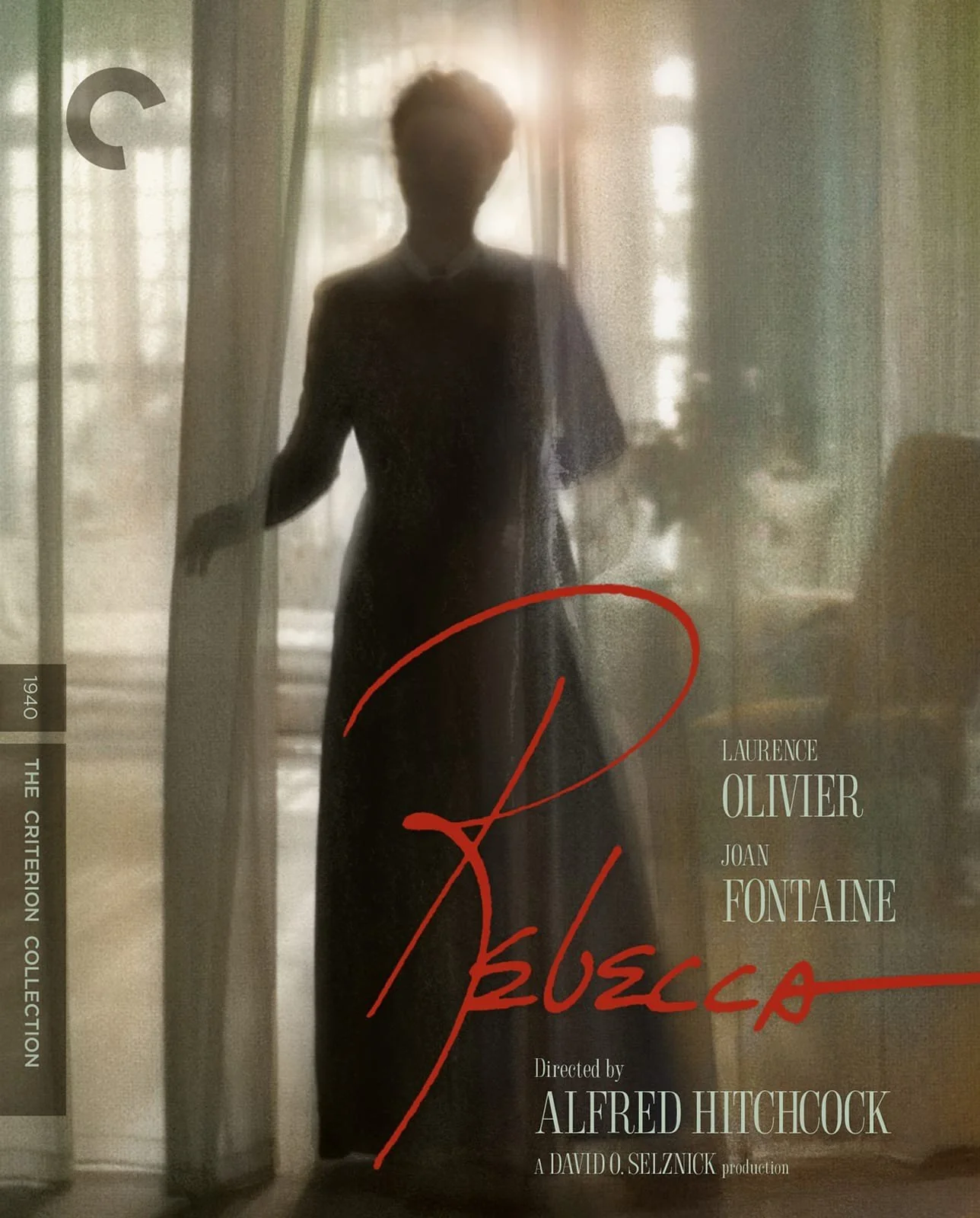
The corridors of HInkley were a tangled thread, linoleum floors cracked and stained, the halls lined with lockers that popped open as easily as a pimple. Scattered here and there were classrooms that I remembered entering: Mr. Franklin for chemistry, Mr. Otto for calculus, and Mrs. Henning for English. Mrs. Henning was a slender thing, wrinkled when I had her, a dark bob and glasses. She taught the classics, of course, but did not balk when a klatsch of girls in the back had taken a liking to E.M. Forester. She did not bat and eye when I slipped out a paperback copy of Rebecca, gifted to me by my sister, the ornate prose falling like gauzy veils across my eyes.

There was Hinkley, our Hinkley, stoic and industrial as it had always been, the swimming pool enclosed in gray glass such that you had to peer beyond your reflection in order to see the water, as though watching through cataract-laden eyes. Time could not tilt the cinderblock walls, beige and bland, nor the brick façade that made it appear more impressive, a minor jewel in the crown of the Aurora Public Schools.

Memories can play odd tricks upon the fancy, even upon a dreamer’s fancy. As I stood there, contemplative, I could swear that the school was not paused for summer recess, but still thrummed with students streaming in and out.

They were memories that cannot hurt, for I knew I was dreaming. In reality, I lay many hundred miles away in Delaware, and would wake by the scratching of a cat who wanted to get under the covers but then changed her mind at the last second. And now, it was my turn to convince students to read and write, a long afternoon no doubt, fraught with anxiety that carried from my dream and into my waking life. But I would not talk of Hinkley, I would not tell my dream. For Hinkley was mine no longer. Hinkley was no more.

#56: The 39 Steps by Viet Dinh

(originally published Sept. 2, 2010)

2jsGvFmN8GvcK82SeP32fOu0YpUx1i_large.jpg

Towards the end of The 39 Steps, our dashing hero (with his equally dashing moustache) demands to know, “What are the 39 steps‽” But before the respondent can complete his answer, he’s shot. Not that the answer has much meaning anyway: the 39 steps are nothing more than a Hitchcockian MacGuffin.

The MacGuffin, as Hitchcock explains, is “the mechanical element that usually crops up in any story. In crook stories it is almost always the necklace and in spy stories it is most always the papers.” It’s the code for which people will kill. It’s the computer disk that a hero must retrieve or protect.

Though the primary purpose of the MacGuffin is to drive the plot forward, I think it also serves a second, more existential role. The MacGuffin is necessary to stave off despair.  A hero’s travails must have some external meaning (to preserve the secret British airpower, to expose the bad guys, to fall in love with the hot blond) to be consequential. As much as MacGuffins give narratives their shape, it also gives on-screen lives their significance.

If only real life provided MacGuffins as easily.

Over this last weekend in Wilmington, there were two shootings, both unrelated, both about 10 blocks from our house. The quality of the neighborhoods in Wilmington, like most urban cities, varies drastically from street to street. When Matthew and I go on recycling strolls (picking up stray cans as a form of exercise), we see the differences immediately. To our north is Baynard Boulevard, with its grand houses and manicured lawns. Very few cans there. But if we go south past Jefferson, the streets grow increasingly dingy. I oftentimes see an object and think, Should I touch that without a Hazmat suit? The cans here are long 40 ouncers, with some variations of the word ‘Cobra’ or ‘Ice’ emblazoned on it (sadly, completely unrelated to the Southeast Asian aperitif of iced cobra liquor).

Our street (21st) is relatively quiet, a mix of families and younger professionals, with very few problems. Occasionally a rumble comes down our street—a mass of youths hooting and hollering and aching for a fight, but our across-the-street neighbor, Sharon, quickly puts the kibosh on that. Her rolling out with her wagging finger is enough to dissipate any trouble.

But these fights have their own MacGuffins (a stolen boyfriend, an insult), but the shootings don’t have a readily-available narrative. A woman shot in the back. An 18-year old. A robbery, a random event; nothing is there to help make sense of the crimes.

This evening, after the sun had set and as the sky approached near dark, I took 39 steps from my street towards 31st Street, where both the shootings took place. I only made it halfway down the block—not far enough to put myself into harm’s way, and yet not far enough to distance myself from the fear that people are killed for no reason whatsoever.

#3: The Lady Vanishes by Viet Dinh

(originally published Feb. 24, 2010)

3_box_348x490.jpg

Tonight, I read from my work-in-progress, a novel, as part of the University of Delaware English Department Reader’s Series, which is a bit of a cheat, since I’ve taught at the University of Delaware for nearly four years now. It’s a cheat that goes both ways, however, since this reading counts as my requirement for a “public exhibition” of my work for my Delaware Division of the Arts Grant, on top of a modest honorarium. A cross-promotional free-for-all.

None of my students showed up, not even the students in my fiction workshop, which was somewhat of a letdown. I remember, as an undergrad at Johns Hopkins, attending at least one or two graduate student readings, and Johns  Hopkins was pretty well known for its Writing Seminar graduate program. One male grad student read a story about surfing, with intimate details of board care with accompanying hand gestures, like Mr. Miyagi, if he had lived in Venice Beach. The grad student looked like a surfer too: sandy-blond hair, walnut-brown tan, even if his body shape struck me as slightly more plump than a surfer should be. But I still have yet to read (or hear) a surfing-related story that has made me want to take up the sport, or even to take an interest in it beyond looking at trim boys in wetsuits.

Actually, that’s probably sufficient.

In any case, The Lady Vanishes proves to be relevant to my reading. The main character of the section I read was British; and the characters in the film are quintessential British types. My main character is gay; and if the two cricket-obsessed, comic relief bachelors, Caldicott and Charters, are not gay, then they’re at least proto-gay. Or ultra-British, which is essentially equivalent to gay. For heaven’s sake, they slept in the same bed together, Charters wearing only a pajama top, Caldicott wearing only pajama bottoms.

Hitchcock finds the good balance in The Lady Vanishes, with the first third of the film playing It Happened One Night-style slapstick (but with a strangling), and the rest of the film bringing the suspense (where is that little old lady?) and the thrills (shoot-out!). After my reading, one attendee mentioned my (brief) use of humor in my piece. Sure, I told her, I had to. Otherwise things would get too dire and readers would slash their wrists.

But, overall, finding this balance still befuddles me. Mass death and destruction don’t really lend themselves to the lulz. But I think I may have discovered my solution. I introduce a surfing scene. Never mind that the novel takes place in northwestern India in a salt marsh. They get typhoons, they get waves. Someone lovingly strokes and waxes his board. Salt water imagery, seagulls, kelp, the end.