Peter Weir

#142: The Last Wave by Viet Dinh

I’m on summer break from middle-school. Boredom stretches far into the distance, like the field near our house that, in a few years, will turn into an industrial park. Me and my across-the-street best friend, Danny, share the same dream, the only source of excitement our minds can conjure: Elitch Gardens, still in its original location in North Denver.

Elitch’s was famous for its wooden roller coaster, Mister Twister, which creaked and buckled and gave the impression that we were in mortal peril, an essential part of the thrill. It interlooped with another coaster, the Wildcat, and zoomed through two tunnels, sudden blackouts that amplified the sound of the wheels a hundredfold, which, compounded with downward velocity, elicited pure sensory overload.

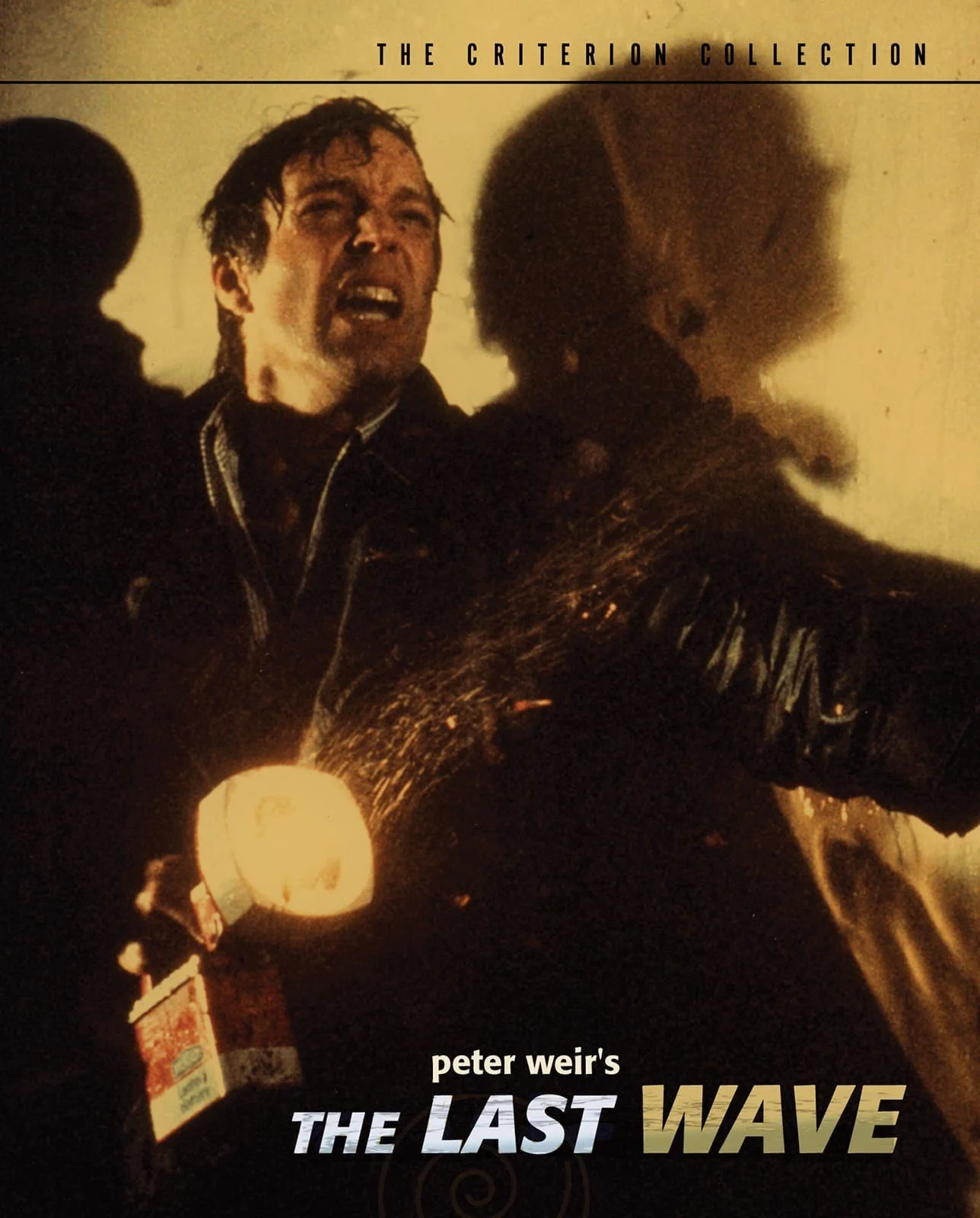
The Last Wave opens with the arid Australia landscape, brown and dusty, the sky blue. When the rain starts without a cloud, the school children are excited by this strange development. But as hail falls in larger and larger chunks—until they’re the size of fists, shattering glass, beaning farm animals—their excitement turns into fear. They huddle away from the windows, cowering. This is the herald of the apocalypse.

One summer day, we cajole Danny’s father to drop us off at Elitch’s. Those who love roller coasters know that the best seats are the front (unobstructed views) or the back (strongest whip, longest sense of suspension in the air). The line for the back seat was always the longest, and we patiently waited our turn.

Who knows what form the apocalypse will take? In The Last Wave, it comes as a deluge: endless torrents of rain, at times black with petroleum. In Richard Chamberlain’s dreams, he sees water coming out of his car radio, in cascade past a second-floor railing, surrounding him as if he’s surfing through the crest of a wave.

For me and Danny, it comes as it’s finally our turn to board the coaster. It comes as a few stray drops of water, which makes as smile as we believe this will enhance the feel of the ride. As we’re about to board, a steady stream. Gunmetal clouds blackening the sky. And then hail. Sharp stings of it, like BB pellets. A machine-gun full. Roaring on the fiberglass awning covering the coaster.

We huddle as much as we can, lace our fingers over the back of our heads, as though in a tornado drill. It pelts our backs and leaves welts. We don’t fear for our lives, not really, but in our doubled-over panic, time ticks endlessly on our skin. Our shorts and shirts are soaked through. And then, it ends.

It’s lucky, we tell ourselves, that we weren’t stuck on the track when the hail hit. We really would have gotten beaned then. We wring out our clothes the best we can. We line up for the pay phone. Ice crunches underfoot. Water squishes between our toes. We survived this watery apocalypse, we say, and got two vouchers for a future visit. Nothing has ended after all.

Elitch Gardens closes that location and moves downtown.

#29: Picnic at Hanging Rock by Viet Dinh

(originally published Apr. 30, 2010)

sasYypNL09rJkL5PuKgVY6aVMkUGUd_large.jpg

“Nobody disappears into thin air,” says the policeman’s wife in Picnic at Hanging Rock. “Not without good reason.”

My senior year, the Hinkley High School drama class put on a show of Picnic at Hanging Rock. I hung out with them, the usual assortment of misfits and oddballs, though I was never really a part of the drama clique. My closest association with the drama department was as the accompaniment for You’re A Good Man, Charlie Brown and a brief appearance as the black eyelinered Valet in No Exit.

But there was one girl in the drama crew whom I gravitated towards: Neala. She was the embodiment of a free spirit: long red hair, a willowy build, a fiery temperament. She listened to Sarah McLachlan and had full-on Celtic pride completely unrelated to basketball. In Picnic at Hanging Rock, she played Sara, the young girl who falls to her death, possibly murdered by the headmistress.

In the auditorium, the set builders went about constructing a mountain out of 2x4s, chicken wire, painted canvas and papier-mâché. They spray-painted the edifice gray, and it rose almost 10 feet into the air. When lit from above, the mountain cast huge, jagged shadows onto the stage, but from behind, you could see how it was a hollow shell, like a cream puff that’s been licked out. A rickety set of steps lead to the top, and it seemed stable enough, until you reached out steady yourself and found the rock crumbling in your hand.

I had a crush on Neala, but whether or not my attraction Neala had a sexual component remains unclear, even to my 30-something gay self today. I want to say no, though I could just as easily say yes. High school was—perhaps still is—a haze of sexual confusion. I want to say that all my attraction to her was sun-dappled and full of warmth, but the more I examine it, the more I revisit it, the more it seems like a mystery that isn’t meant to be solved.

In my senior yearbook, there’s a full-page spread for Picnic at Hanging Rock and features a photograph of Neala, as Sara, dressed in a white nightgown, sitting on the ground, looking up pleadingly. The caption reads: “Doomed Sara regrets her life,” and beneath that, in pen, Neala wrote: “Does she?”

I got in touch with Neala about two years ago, during one of those jags where I trawl the Internet in search of old friends, half-remembered names, fleeting acquaintances. I came across Neala’s mother, who then put me in touch with her. She finally wrote me an email under an assumed name, because she had been scrubbing her presence off the Internet because of a stalker. I replied, saying how good it was to get back in touch with her, that we should stay connected, that nobody should disappear into thin air. I’m waiting to hear back from her, and until I do, I will imagine her at the top of a hollow mountain, arms outstretched, as if to beckon me closer into the void, into the mystery.